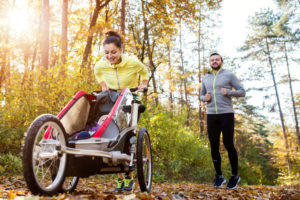
Beautiful young family with baby in jogging stroller running outside in autumn nature
When expecting a baby, there are a couple of things you must have. Buying new products or just adjusting to life with a newborn can be quite hectic especially for first time mothers. Ranging from behavioral change around the house, clothing, traveling to food or even work, both the husband and wife have to fully prepare for the new member. What many people don’t get is that you don’t need to buy much at the beginning. You just have to get the basics right and then fill in others later. Here are some of the top must-haves for new parents according to mommasbaby.com who’s written the popular article about how to buy the best double jogging stroller.
What to wear
Well, this is the top worry for most first time mothers. If you are going to keep your new member warm especially during the colder season, then having cotton made clothing will be important. In most cases clothing essentials come in 6 one-piece body suits. For instance, you will need muslin squares to provide comfortable surface the baby’s head while sleeping on the cot. You should buy lots of them as you can use them to mop up baby sick.
Diapers and Wipes
Changing diapers is top on the list of things that are most anticipated for by new mothers. You will thus need to have disposable nappies before having the baby. Additionally, a changing mat, changing bag and toiletries or even diapers are a must have. Remember, having them as soft and comfy as possible is important. You may find it also necessary to have a nappy buckets with tight lids for holding nappies before washing. Have diaper rash cream in your list, you never know when your baby will develop rashes.
Baby baths and Shampoo
It is advisable to master the skill even before having the baby. This is because the baby’s skin is very soft and delicate. Invest thus in small soft bathing towels, wash liquid of about pH 5.5, Vaseline petroleum jelly, baby washing bowl and baby unscented massage oil. You should also buy a first aid kit for the by which normally comes with a thermometer, nail cutter, comb and many other things.
Essentials for sleeping
Ideally, a well fed baby will always fall asleep after bath. Preparing the sleeping arrangement is that very crucial. It is advisable that the baby’s bassinet should be placed in bedroom during the first 15 weeks for close monitoring. Investing in a breathable mattress and a couple of cotton made blankets is very important. You should also consider having a baby monitor if you can, but a sleeping bag is a must. If you don’t have a thermometer already, buying one to check temperature is important as any slight change could mean a serious condition.
Stroller And Car Seat
Finally, there are those times when you will need to stroll or travel with your kid and one of them is a baby stroller. When traveling, having a rear facing car seat that comfortably fits is a must. You have to buy as the law states to avoid consequences. However, if you are just going for a jog or walk in the evening, then buying stroller is advisable. You can check out the best ones in the market to ensure that you always keep your baby comfortable and safe. You will notice that buying all these things at once is very difficult, just consider the top must-haves for new parents and choose that which you will need more.